
Ship directly or hold inventory in a U.S. warehouse?
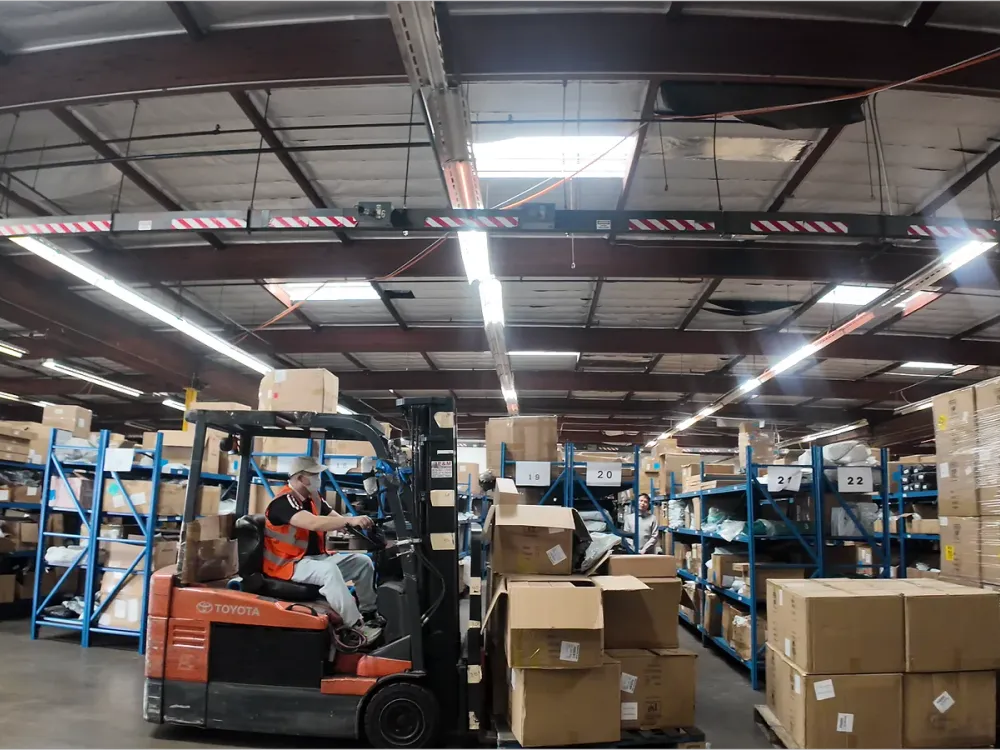
Discuss direct delivery when the destination and receiving plan are clear. Include U.S. warehousing when you need staged replenishment, shipments to multiple addresses or returns handling. Inventory use and outbound orders should guide the decision.
| Requirement | Connected stages | Confirm first |
|---|---|---|
| FBA or designated-warehouse replenishment | Preparation → air or ocean freight → customs coordination → delivery | Destination, shipment details, labels and receiving window |
| U.S. stock with staged dispatch | Freight → receiving → storage and sorting → distribution | Inventory volume, storage period and outbound schedule |
| Order fulfillment | Receiving and SKU checks → storage → pick and pack → parcels | SKUs, order profiles, packing and delivery regions |
| Returns for redispatch | Receiving → condition checks → relabeling or repacking → delivery | Return details, new labels and receiving requirements |
What information needs to move with the goods?
Each handoff should reconcile cargo identity, quantity, handling instructions and the next receiving point. The stages can be coordinated, while the scope and charges for each stage remain explicit.
- Collection in China: organize SKUs, carton counts, dimensions, weights and label versions; identify packing or labeling needs.
- International transport: confirm the mode, document responsibilities and items included in the quotation.
- Arrival and customs coordination: prepare arrival information, required documents, collection and onward receiving arrangements.
- U.S. warehousing: reconcile expected and received goods, then specify storage, sorting, fulfillment or returns work.
- Delivery: confirm the address, ZIP code, appointments and unloading facilities before comparing parcel, LTL or FTL options.
How should you compare end-to-end quotations?
Use the same origin, destination and handling scope for every comparison. An international freight rate alone may leave out receiving, storage, packaging, local delivery and exception-related work.
- List inclusions, exclusions, billing units, validity and possible additional charges.
- Separate initial shipping costs from recurring storage and order-dispatch costs.
- When the plan changes, record the reason, affected stages and work requiring reconfirmation.
What if quantities or receiving plans change?
Identify the affected stage and check its impact on later receiving and delivery. Changes to addresses, split dispatch or warehouse work require an updated feasibility, cost and handoff review before execution.
- Label changes: map the new version to the old and check work already completed.
- Receiving discrepancies: retain carton references, packing photographs and the corresponding item list.
- New receiving windows: notify the team so collection, storage and delivery can be aligned.
Prepare these details for your enquiry
- Commodity, cargo characteristics, SKUs and carton counts
- Packed dimensions, weights and packaging format
- Origin in China and cargo-ready date
- U.S. destination, ZIP code or receiving-warehouse details
- Replenishment, storage, split-dispatch or return requirements
- Preferred schedule and quotation scope
This is a planning guide. Acceptance, scope, timing and charges are confirmed for the actual shipment.