
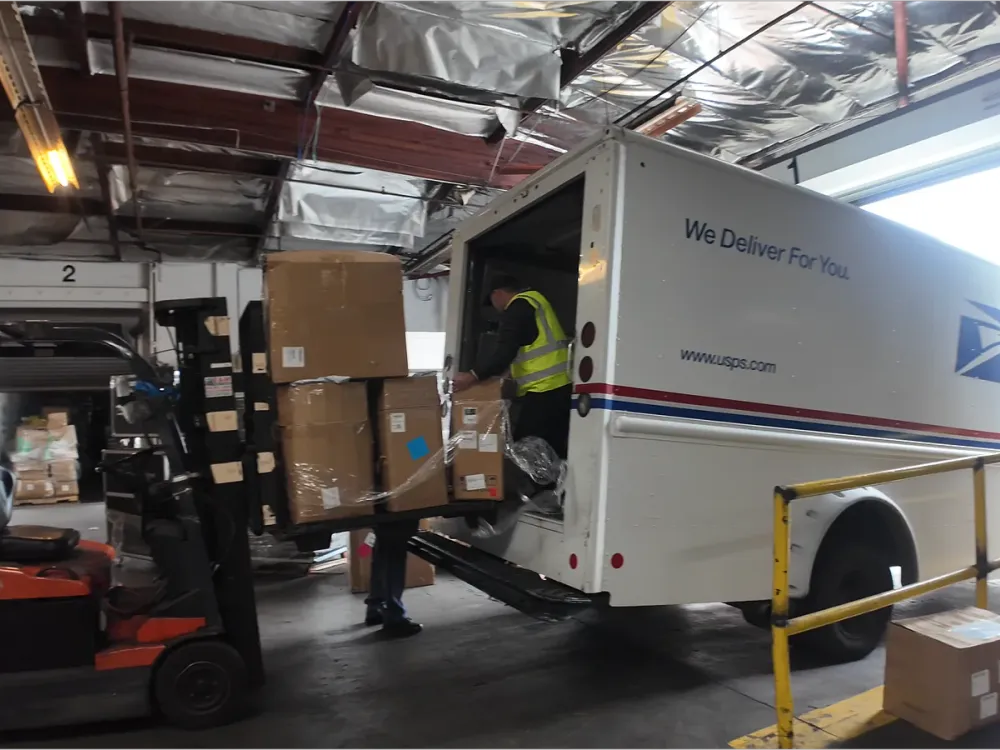
What should you compare between LTL and FTL?
First assess whether the goods fit the LTL service and handling requirements, then compare truckload space and delivery arrangements. Non-stackable, unusual-size or receiving-restricted cargo needs particular attention.
| Consideration | LTL | FTL |
|---|---|---|
| Organization | Shared capacity under the selected service | Collection and delivery around truckload capacity |
| Cargo information | Accurate pallet dimensions, weights and commodity details | Total volume, weight and loading requirements |
| Handling | Check packing, stacking and intermediate handling | Check equipment, loading and on-site support |
| Costs | Check transport and additional service items | Check truckload charges, waiting and extra work |
Why do receiving conditions matter before quoting?
Different address types can require different unloading services for the same goods. Confirm appointments, equipment, contacts and receiving windows as well as addresses and ZIP codes.
- State whether docks or forklifts are available and whether a liftgate is needed.
- Give dimensions and gross weight including each pallet, plus stackability.
- Provide collection and receiving windows, appointment information and on-site contacts.
How do you look beyond the base freight charge?
Include additional service needs in the same request and ask for inclusions and exclusions. FedEx’s glossary identifies liftgate work as an example of an accessorial charge; the terms of the actual selected carrier service apply.
- Check that quoted commodity, dimensions and weights match the actual shipment.
- Confirm whether appointments, unloading assistance, waiting or redelivery charges apply.
- Update changed receiving conditions before reconfirming price and arrangements.
When should both options be quoted?
Compare both when volume, specifications or receiving restrictions make LTL less clearly suitable. Use the same locations, time windows and work scope. A fixed number of pallets is not a universal dividing line.
- Supply the complete pallet list and unloading requirements for both options.
- Align warehouse release and collection, including when the goods will be ready for handoff.
Prepare these details for your enquiry
- Collection and delivery addresses, ZIP codes and location types
- Commodity, pallet count and individual dimensions and weights
- Stackability, packing and loading restrictions
- Docks, forklifts, liftgate and appointment needs
- Cargo-ready time and receiving window
This is a planning guide. Acceptance, scope, timing and charges are confirmed for the actual shipment.
Reference material
- FedEx: shipping glossary and accessorial charges
General terminology only. This reference is not a PAGO quotation or a claim of carrier authorization.